Echinacea Seeds,
Pallida

4.73 ReviewsSKU #HB242 · 30 seeds
Price
Regular price $3.00
Regular price $0.00 Sale price $3.00
Save $-3
/

FREE U.S. SHIPPING, 2-YEAR GUARANTEE


Description

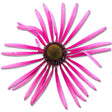
This is an excellent choice for those who like the company of hummingbirds and butterflies in their garden. Native to the eastern half of the U.S. and Canada, this is a super adaptable and easy-to-grow flower that Native Americans held in high esteem as a powerful medicinal. They require very little care; as long as they aren’t excessively moist, they will thrive just about anywhere.

Plant Details

Botanical Name
Echinacea pallida
Life Cycle
Perennial
Sun Requirement
4–12 hr.
Days to Germinate
10–15
Days to Maturity
120
Planting Depth
⅛ in.
Plant Spacing
8–10 in.
Ideal Temperature
65–90°F
Frost Hardy
Yes

Growing Guide

When to Grow

Pallida has one of the widest planting windows in this group, spring or fall. Start it indoors 8-12 weeks before your last frost and transplant once frost danger has passed, direct sow outdoors in spring, or sow in fall and let the seed sit over winter. The seed needs 30 to 60 days of cold, moist chilling before it will come up: only the fall sowing gets that on its own, so for an indoor start or a spring direct sowing, first mix the seed with damp sand or a moist paper towel and refrigerate it 30 to 60 days. Either way, set the seed 1/8 inch deep and keep the soil relatively moist until germination, about 10 to 15 days at 65-70 F once the seed has had its chill. Space plants 12 to 24 inches apart. Maturity arrives in roughly 120 days.

How to Sow and Plant

  • Seeds germinate in 10-30 days.
  • Start indoors 8-12 weeks before last frost or direct sow seeds outdoors before last frost (you can direct sow in the fall and allow seeds to sit over winter).
  • Sow seeds 1/4- 1/2 inch deep.
  • Ideal germination temperature is 65-70 F.
  • Keep soil relatively moist until germinated.

How to Grow

  • Plants are very adaptable and will tolerate a wide range of conditions, but will perform their very best when given full sun and rich, well-drained soil.
  • Space plants 12-24 inches apart.
  • Keep plants deadheaded to promote blooming.

PESTS/SPECIAL CONSIDERATIONS

A generally disease-free plant.

  • Be sure to keep echinacea free of powdery mildew and rots by not overcrowding plants.
  • Poor air circulation and very poorly drained soil can lead to fungal issues for the plants.

How to Save Seeds

  • Allow the flowerhead containing the seeds to completely mature and dry on the plant, then clip off the flowerhead and place in a container.
  • Working over the top of another clean, opened container, rub the flowerheads between the palms, breaking them apart.
  • The small, blackish seeds can be separated from the chaff by first screening and then winnowing.

FAQ

How much care does Pallida need once established?

Very little. As long as the plants are not excessively moist they will thrive just about anywhere, and they tolerate a wide range of conditions. They do perform their very best in full sun with rich, well-drained soil.

How far apart should Pallida be spaced?

Space plants 12 to 24 inches apart. Crowding is worth avoiding, since poor air circulation and very poorly drained soil can invite powdery mildew and rots on an otherwise disease-free plant.

Where does Pallida come from, and how widely will it grow?

It is native to the eastern half of the U.S. and Canada, where echinacea turns up in prairies, in moist to dry wooded areas, and along roadsides. That adaptability shows in its range: Pallida is hardy in USDA zones 3 to 8. It is an excellent choice for gardeners who like the company of hummingbirds and butterflies.
Customer reviews

4.7 / 5 3 Reviews

What gardeners are saying

  • Sprouts under lights: Came up well indoors under lights, with or without cold stratifying.

  • Pollinator favorite: A lovely plant much loved by pollinators.

  • Vigorous growth: Seedlings grow fast and plants can be divided in a year or two.