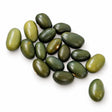
Malawi Green common beans on a white background.

Bean Seeds,
Malawi Green

SKU #WW168 · 30 seeds
Price
Regular price $5.00
Regular price $0.00 Sale price $5.00
Save $-5
/

Out of stock

FREE U.S. SHIPPING, 2-YEAR GUARANTEE


Description

Pods shimmer in deep green with an iridescent sheen on productive 6-foot vines that carry a story across continents. Developed in 19th-century Germany and later grown in Malawi, this rare bean produces 4-inch pods filled with richly flavored beans ideal for soups. Preserved through the Roughwood Seed Collection of William Woys Weaver, it’s a global heirloom that blends beauty, flavor, and history in one remarkable planting.

Growing Guide

When to Grow

Beans must have warm weather to germinate — sown into cool soil they simply rot — so wait for warm weather before you direct seed, or start them indoors. Sow 1 inch deep and 2 to 4 inches apart and keep the seedlings moist but not soaked; at an ideal germination temperature of 70–80°F, seeds sprout in 5 to 8 days. These are 6-foot vines, so set them against a fence or build a trellis before they run, and thin the plants to 6 inches apart. Pick continuously to keep them productive, and use drip irrigation to keep the leaves dry and disease free.

How to Sow and Plant

  • Beans are very easy to germinate. Keep in mind that they must have warm weather in order to germinate; cool weather will cause beans to rot in the soil.
  • Direct seed or sow indoors.
  • Sow seeds 1 inch deep and 2-4 inches apart. Keep seedlings moist but not soaked.
  • Ideal germination temperature is 70-80 F.
  • Seeds germinate in 5-8 days.

How to Grow

  • Bush green beans do not need support and should be thinned to 4 inches apart.
  • Continuously pick to keep plants productive.
  • Pole green beans will need support. Try growing them up a fence or constructing a trellis.
  • Thin pole beans to 6 inches apart.
  • Dry beans are grown just like green beans. They can be harvested when immature and used like green beans or left on the vine to dry.
  • To harvest, pull the plants and shake them vigorously into a bag to release the beans from their pods.

PESTS/SPECIAL CONSIDERATIONS

  • Use drip irrigation to keep leaves dry and disease free.
  • The Mexican bean beetle can be a difficult insect pest. Apply organic insecticidal soap to the undersides of leaves to control the eggs.

How to Save Seeds

  • Beans do not easily cross pollinate and can be grown close to one another, making them the ideal seed saving project for beginners.
  • Save seeds from the best-looking, best- tasting, and most vigorous beans.
  • Store in a cool, dry place for the winter. (A glass jar in the refrigerator works well.)

FAQ

Why is Malawi Malachite Green also called the Malachite Bean?

The beans have a beautiful iridescent green shimmer like malachite, and from the 1850s they were known commercially in Europe as the Malachite Bean because of that blue-green color, similar to the mineral of the same name.

Does it need a trellis?

Yes. The 4-inch pods are carried on 6-foot vines, so this is a pole bean and will need support — grow it up a fence or construct a trellis, and thin the plants to 6 inches apart.

What do the pods look like at harvest, and how should I cook them?

Pick the 4-inch pods young, slender, and green for fresh use - terrific flavor, and worth trying in an unusual green bean soup. Left on the vine the pods ripen brownish-yellow and dry down, with 5 to 6 beans per pod for shelling or seed saving.
Customer reviews

No reviews yet — be the first to share how it grew for you.